Outdoor Wedding Planning Tips: How to Design a Beautiful, Comfortable Celebration Outside
Planning an outdoor wedding requires careful attention to weather logistics and guest comfort. Whether you’re dreaming of a vineyard ceremony, a garden reception outdoors, or a celebration in your own backyard, the details that make an outdoor event feel effortless are exactly the ones that demand the most forethought. This guide walks through every phase of the planning process so your special day is as stress-free as it is beautiful.
Key Takeaways
- Prioritize weather planning from day one: choose a season, time of day, and a clear weather backup plan, so your outdoor wedding can go ahead rain or shine.
- Guest comfort should drive most decisions: shade, hydration, seating, restrooms, bugs, and proper lighting matter more outdoors than in a ballroom.
- Backyard weddings can be budget-friendly, but only if you factor in rentals, power, permits, and clean-up just like a professional outdoor venue.
- Communicate clearly with guests on your invitations and wedding website that you’re planning an outdoor wedding, so they can dress and plan appropriately.
- Lock in experienced outdoor vendors early — planners, caterers, entertainment, and rental companies — so logistics like sound, power, and layout are handled smoothly.
Start with Your Vision, Season, and Date
Most couples start with an image: a wedding ceremony under ancient oaks, a cocktail hour on a terrace overlooking rolling hills, or a backyard wedding on land that’s been in the family for generations. That vision is the anchor, but the calendar and climate are what make it realistic. Avoid outdoor weddings during extreme weather conditions by choosing dates that give you the best odds.
Spring and fall are ideal for outdoor weddings across most of the U.S. According to Fair Weather Weddings, which analyzed climate data from 1991–2025, early fall months (September through November) are the calmest period for outdoor events in many states. Meanwhile, the Old Farmer’s Almanac highlights May through October as the most stable window overall. Consider potential weather conditions such as wind, heat, or cold when planning an outdoor wedding, and use NOAA or local weather archives to compare average temperatures, rainfall probability, and sunset times for your candidate dates.
Schedule your ceremony for late afternoon or early evening, around 4:30 to 6:30 p.m. in the warmer months, to dodge midday heat and capture flattering golden hour light. Also check whether holidays, local festivals, or big sporting events overlap with your date, which can spike accommodation prices and thin your guest list. Planning an outdoor wedding at a professional wedding venue versus a private backyard comes down to a tradeoff: dedicated outdoor venues offer built-in infrastructure, while a backyard wedding gives you total flexibility and personal meaning, but also total responsibility.
Set a Realistic Budget (Outdoors Isn’t Always Cheaper)
The myth that outdoor settings automatically save money falls apart once you start pricing the infrastructure that a building normally provides. The Knot’s 2025 study found that the average U.S. wedding cost reached about $34,000 with an average guest count of 117. Outdoor weddings can hit that number quickly.
Major expense categories to plan for:
- Tent rental: A structure alone for 100–150 guests runs $500–$2,800; a full package with flooring, sidewalls, lighting, and climate control pushes to $3,000–$7,500 or more. Rent a tent early to avoid sellouts during peak season.
- Catering and bar service, including cook tent setup and cold storage
- Rentals: Tables, chairs, linens, a dance floor over grass, portable restrooms, generators
- Décor, photography, entertainment, attire, transportation
Common hidden costs catch couples off guard: delivery fees for remote sites, extra generators ($300–$500/day), lighting beyond basics (which can add 30–80% on top of tent costs), insect control, and overtime charges for late teardown. A backyard wedding budget for 120 guests can see that the cost of a tent, tables, chairs, and restroom trailers alone jumps from $4,000 to $8,000 before food or décor enters the picture.
Set aside a contingency fund of about 10–15% of the total budget specifically earmarked for weather-related changes or last-minute rentals. When money is tight, prioritize guests’ comfort line items — shade, proper lighting, restrooms, hydration stations — over purely decorative extras.
Choose the Right Outdoor Venue or Backyard Space
A dedicated outdoor venue, such as gardens, vineyards, barns, and parks, comes with some built-in infrastructure like power, restrooms, and staff. Hosting in your own backyard gives you full creative control but means you supply everything. About 25% of couples prioritize outdoor reception venues when selecting where to celebrate.
When evaluating outdoor venues, check:
- Capacity relative to your guest count
- Natural beauty and natural elements you can incorporate — wildflower clippings for table settings, decorations hung from tree branches for a natural look, or a woodland wedding theme for a forest venue
- Built-in shade, structures, and whether the venue offers an indoor option as backup
- Power availability, parking, curfews, and noise ordinances
Research local regulations for outdoor events before booking. Check for local noise ordinances and permits when planning outdoor events, especially for amplified music, alcohol service, and late-night gatherings. Walk the property at the exact time of day you plan to marry, check the sun direction, wind exposure, and potential muddy or uneven ground after rain. That walk-through reveals more than any brochure.
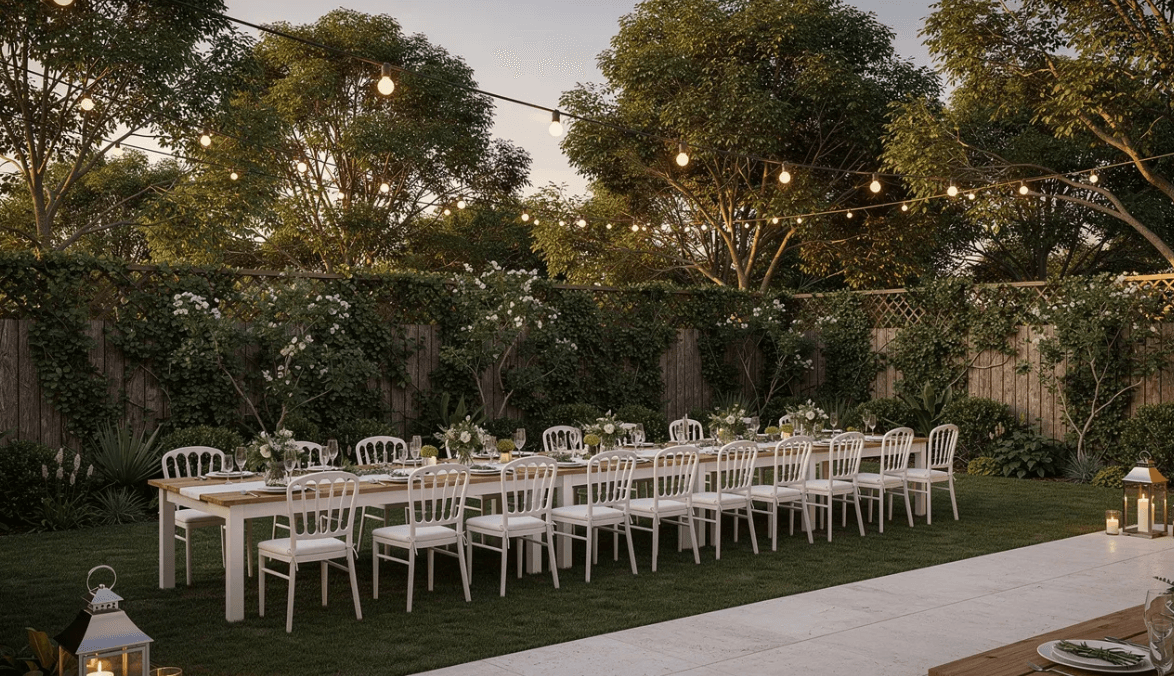
For a backyard space, measure usable flat area, sketch layouts for the ceremony, cocktail hour, and reception space, and confirm a realistic guest count for the property. Utilize comfortable seating in garden areas and incorporate natural scenery into your wedding décor to let the natural setting and natural beauty do the heavy lifting.
Always Have a Weather Backup Plan
A backup plan is non-negotiable for any outdoor wedding, regardless of season or climate. Have a backup plan for inclement weather, full stop. More specifically, have a backup plan for all three phases of the wedding: ceremony, cocktail hour, and reception.
Typical options include:
- Reserving a nearby indoor space or covered pavilion as Plan B
- Renting a frame or pole tent with sidewalls, a solid backup plan that also improves lighting and sound
- Renting a marquee or tent specifically for inclement weather situations
- Choosing a clear tent, which allows an outdoor feel while keeping guests dry if rain arrives
Design a flexible layout where your ceremony can move under a tent or into an indoor space without confusing guests. Put rain and wind clauses in vendor contracts, including tent installation timing, floor protection on soft ground, and additional heaters or fans. Plan for wind protection for lightweight décor at outdoor weddings so floral arrangements and table settings stay put.
Communicate your rain plan in advance to your wedding planner, wedding coordinator, and key family members so no one is improvising if the weather shifts. Monitor weather forecasts leading up to your wedding day — check both the 10-day and 48-hour forecasts — and set a firm decision time (e.g., 10 a.m. the day before) to switch to the backup plan if necessary.
Guest Comfort: Shade, Seating, Hydration & Bugs
A memorable outdoor wedding balances beauty with comfort. If guests feel overheated, bitten, or stranded without a restroom, the aesthetics won’t matter.
- Shade and sun: Use sail shades, umbrellas, tents, or existing tree canopies. Orient the ceremony seating so guests aren’t staring into direct sun. Create shaded areas near the bar and food stations.
- Hydration: Set up hydration stations with infused water, lemonade, or iced tea at obvious points — venue entrance, ceremony exit, near the bar. Providing water stations is important to keep guests hydrated during hot weather, especially during summer outdoor events.
- Seating: Choose comfortable seating over metal folding chairs, especially in heat. Offer blankets or wraps for cool evenings. Set up lounge furniture in a few spots for older guests or family members who need a break. Consider accessibility for older guests at outdoor venues — minimize walking distances and avoid stairs for anyone with mobility issues.
- Restrooms: Rent luxury portable restrooms for guest comfort. As a general rule, provide one bathroom for every 35 guests. If your venue has only one bathroom indoors, you’ll need portables.
- Insects: Research local bug activity by season and time of day. Use citronella candles in lanterns for subtle control. Consider hiring an exterminator two days before the wedding for professional spraying. Provide guests with travel-size bug repellent sprays or wipes, and offer sunscreen and bug spray to guests upon arrival as part of a comfort station.
Assemble a “comfort station” with sunscreen, hand fans, umbrellas, bug repellent, and basic first-aid items. These practical touches can double as wedding favors that encourage guests to feel cared for.
Layout, Lighting, and Power for an Outdoor Event
Great outdoor weddings feel effortless because the layout and infrastructure were carefully planned behind the scenes. Map a logical flow from ceremony to cocktail hour to reception, avoiding long uphill walks and congestion points. Outdoor wedding logistics should include considerations for guest accessibility and terrain — keep paths smooth and offer alternatives like a golf cart for guests who can’t manage distance on foot.
Proper lighting serves double duty as ambiance and safety. Hang string lights or bistro lights over dining areas, place lanterns along paths, and add soft lighting around bar and restroom areas. Provide appropriate lighting for safety and ambiance once the sun sets during outdoor ceremonies. Rent outdoor heaters for chilly evening receptions so guests stay comfortable after dark.
Evaluate power needs early: sound system, band or DJ, catering equipment, bar coolers, and all lighting. Outdoor venues may lack sufficient power outlets for equipment, so confirm circuits at the venue and rent generators for remote outdoor settings. Place generators where noise won’t interrupt vows or speeches. Test lighting and sound at dusk during a rehearsal evening so you can adjust before the wedding day.
Vendors for Outdoor Weddings: Catering, Entertainment, and Photography
Outdoor experience matters more than portfolio size when choosing vendors. A caterer who’s only worked in banquet halls won’t anticipate the logistics of a cook tent, shaded prep areas, or safe food temperatures in summer heat. Establish clear plans for food service logistics outdoors, including temperature controls and preparation areas.
For catering, choose menu items that hold up well outside — avoid creamy desserts or raw items that spoil quickly. Food trucks and food stations work well for casual wedding themes, while plated dinners need covered staging areas with refrigeration. Use catering equipment rated for outdoor use.
For bar service, calculate quantities based on guest count and event length. Options range from a full open bar to beer-and-wine only to signature cocktails.
For entertainment, outdoor sound logistics require professional microphones and sound systems to be heard clearly, as sound dissipates differently outdoors than in an indoor space. Check local noise ordinances and plan end times accordingly. Live bands versus DJs handle outdoor acoustics differently; ask for outdoor event references.
Photographers and videographers need familiarity with changing natural light, wind, and unexpected shadows in outdoor venues. Encourage building a team that communicates well with each other and with your wedding planner about timing, layout, and backup plan details.
Backyard Weddings: Turning Home into a Wedding-Ready Outdoor Venue
There’s something irreplaceable about celebrating on land that holds personal history. A backyard wedding offers total customization and a natural setting that no rented venue can replicate. But it requires more planning than most couples expect.
Assess feasibility honestly: lawn size versus guest list, parking capacity (roughly one car per two guests), and access for rental trucks. If the road to your property can’t handle a delivery truck carrying tent sections, you have a problem.
Critical backyard rentals include:
- Tent (frame, pole, or sailcloth depending on budget and aesthetic)
- Tables, chairs, linens, and a dance floor or flooring over grass
- Portable restrooms and generators
- Heaters, fans, and décor elements
Address household logistics: protect landscaping from heavy foot traffic, decide which indoor areas are open to guests, and arrange garbage and recycling pickup after the event. Start yard prep at least a month before the big day — mowing schedules, trimming trees, power-washing patios, and staging areas for catering and bar service.
Assign specific roles to friends or family members on the wedding day: parking attendants, restroom checkers, trash monitors. The couple shouldn’t be managing operations during their own celebration.
Communication, Invitations, and Guest Information
Setting expectations early means guests arrive prepared. State clearly on save-the-dates and invitations that the wedding will be outdoors, for example: “Outdoor garden ceremony and tented reception — weather permitting.” Communicate weather expectations on invitations or your wedding website.
Use your wedding website to share details on terrain (grass, gravel, sand) and dress code, and to give guests footwear recommendations based on the terrain in advance. Include practical information: directions, parking instructions, shuttle or golf cart plans, start and end times, and a note about the indoor option if bad weather moves things inside. Send save-the-dates 8–10 months out for destination or remote outdoor venues. Reminder emails or texts the week of the wedding help guests know what to expect if the forecast shows unusual conditions.
Day-Of Execution, Clean-Up, and Post-Wedding Wrap-Up
Hiring a day-of coordinator can streamline logistics and management for outdoor weddings. A trusted point person manages vendor arrivals, tent setup, sound checks, and last-minute layout tweaks so the couple can focus on getting married.
Create a simple timeline with buffer time for unexpected delays, with clear arrival and end times for each vendor. Assign clean-up logistics in advance: who handles décor takedown, who collects gifts and cards, and how the rental company will pick up chairs, linens, and lighting. Outdoor venues and backyard weddings often require same-night or early-morning clean-up to avoid damage, neighbor complaints, or extra fees.
Close the loop by sending thank-you cards within a few months, especially acknowledging helpers who supported the extra work involved in planning an outdoor wedding. A great outdoor wedding doesn’t happen by accident — it happens because someone planned for every variable while still leaving room to enjoy the moment.
FAQ: Common Outdoor Wedding Planning Questions
How far in advance should I start planning an outdoor wedding?
Start 12–18 months before the date, especially if you want a peak-season Saturday. Outdoor venues and rental companies book fast during the warmer months — tent sizes for 100+ guests can sell out four to six months in advance in competitive metro areas.
What is the best way to create a budget-friendly outdoor wedding?
Focus on a smaller guest list, choose in-season flowers and food, limit rental types, and let the natural landscape serve as your main décor rather than expensive add-ons. A beer-and-wine bar instead of a full open bar also cuts costs significantly.
Do I really need a tent if my outdoor venue is known for good weather?
Yes. Even reliably sunny climates deliver unexpected storms, intense UV, or wind. Rent a tent if your wedding is fully outdoors. A tent also provides a ceiling for lighting and sound and protects catering equipment from the elements.
How do I make sure older guests are comfortable at an outdoor wedding?
Minimize walking distances, provide sturdy chairs with backs, offer shade and blankets, and place restrooms and parking as close to the main reception space as possible. A golf cart can shuttle guests who struggle with uneven ground or distance.
What should I pack in an emergency kit for an outdoor wedding day?
Bug spray wipes, sunscreen, stain remover, bandages, safety pins, extra phone chargers, hand fans, clear umbrellas, zip ties, extra tent stakes, tape, scissors, and a small sewing kit. Keep it accessible to your wedding coordinator and bridal party throughout the day.