Zola vs Joy is the closest matchup in wedding tech: two well-designed, genuinely free platforms with native registries and polished guest tools. The short answer — Zola wins the registry and overall polish; Joy wins on being completely free (zero-fee cash funds, no premium tier) with the least monetization pressure in the product. Neither is trying to be a deep planner.
What Zola and Joy each do best
Joy
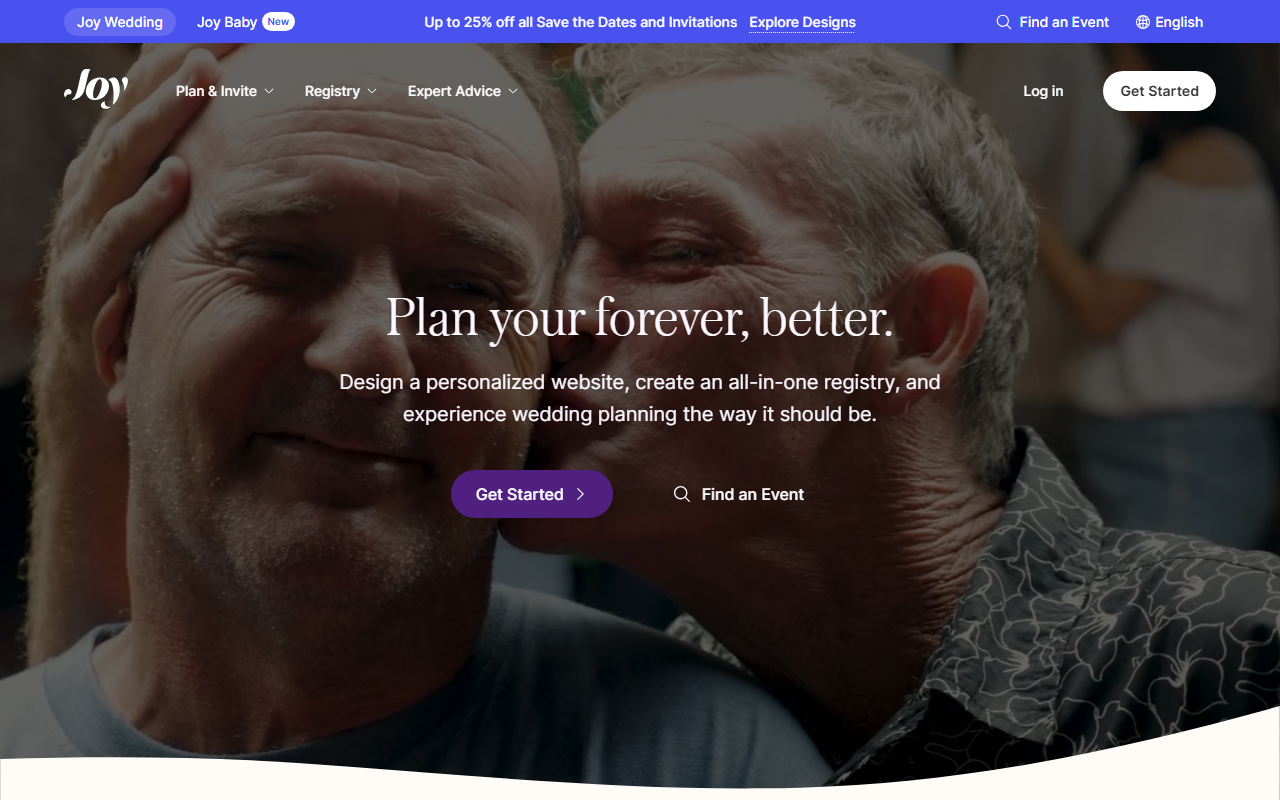
Joy homepage, captured July 16, 2026.
Joy's pitch is "Plan your forever, better," and the free tier is the real thing: wedding website ("Beautiful, free and uniquely yours"), an all-in-one registry with zero-fee cash funds, guest list, Smart RSVP with custom questions, a "magic link" contact collector that fills your guest addresses automatically, hotel room blocks at up to 30% off, and a mobile app. There is no premium tier visible anywhere — monetization is optional print orders and partner add-ons. No vendor directory exists in the product, which also means no paid placement shaping anything.
Zola
Zola is the registry benchmark: one native catalog, guests buy on Zola directly, group gifting, cash funds (roughly 2.5% card processing, with the flexibility to choose who absorbs it), and a 20% post-wedding completion discount. The website builder and guest tools are polished, there's a vendor marketplace Joy lacks, and personal wedding advisors come free. Revenue is commerce — registry commissions and stationery — plus some vendor placement.
Zola vs Joy on the wedding registry
Zola wins, and it isn't close — the native buying experience and completion discount are the category standard. Joy's counterpunch is real, though: its cash funds are zero-fee, which matters if most of your registry is honeymoon and house funds rather than goods. Cash-heavy couples should do that math before defaulting to Zola.
Zola vs Joy on wedding websites and guest tools
Both are strong. Zola's templates are more numerous and its ecosystem more integrated; Joy's Smart RSVP (custom questions per guest) and the contact-collector magic link are the two cleverest guest tools on any free platform. Android users should note Zola's app was discontinued in early 2023 (mobile web instead); Joy maintains a mobile app.
What each privacy policy actually says
Neither platform sells vendor leads — but neither is advertising-free behind the scenes, and the honest comparison quotes both. Zola's policy (updated October 2025) answers "Yes" in its own disclosure tables to selling/sharing personal identifiers, internet activity, and commercial information with advertising partners. Joy's policy (updated March 2026) lists "Delivering Targeted Ads" among its processing purposes, names ad networks — Meta Ads, Google Ads, Criteo, Microsoft Ads — among third-party recipients, collects guest data too, and notes that user data may be used to "train artificial intelligence models" (opt-out by email). Both offer privacy opt-outs; whichever you choose, take the two minutes.
Where a paid wedding planning tool fits
Zola and Joy are guest-and-gift platforms first; neither has a real budget tracker, generated task plan, or an assistant that acts. If you want the planning itself handled, that's the job of a dedicated tool — ours is Eydn ($79 once: AI planner that takes action, 36-line-item budget, no ads or data sales), and it pairs cleanly with either platform's registry. Full field: the best wedding planning apps in 2026.
Zola vs Joy: which free wedding platform should you pick?
Pick Zola if the registry is the main event, you want a vendor marketplace in the same tool, or your guests' buying experience is the priority.
Pick Joy if you want the most genuinely free package in wedding tech, zero-fee cash funds, or the cleverest guest tools — and you don't need a vendor directory (our marketplaces guide covers where to find one).
Frequently asked questions
Is Joy wedding really free?
Yes — and unusually, there's no premium tier visible at all. Website, registry with zero-fee cash funds, guest list, Smart RSVP, contact collection, and hotel room blocks are all free. Joy makes money on optional print orders (save-the-dates, invitations) and partner add-ons, not by charging couples or selling vendor placement.
Is Zola or Joy better for a wedding registry?
Zola, and it isn't close: one native catalog guests buy from directly, group gifting, and a 20% post-wedding completion discount. Joy's registry is capable and its zero-fee cash funds are a real advantage for cash-heavy registries, but Zola's is the category benchmark.
Is Zola or Joy better for data privacy?
Neither is a clean room; the difference is degree. Zola's policy answers "Yes" in its own tables to selling/sharing identifiers with advertising partners. Joy's policy lists "Delivering Targeted Ads" among processing purposes and names ad networks (Meta, Google, Criteo, Microsoft) among recipients — and notes user data may train AI models, with an email opt-out. Both offer privacy opt-outs; use them either way.
Does Joy have a wedding vendor directory?
No — Joy's product is website, registry, and guest tools; there's no vendor marketplace. If vendor discovery matters, pair Joy with The Knot's directory (used as a phone book) or an AI-search tool. That absence cuts both ways: it's also why Joy has no paid-placement pressure.
What's a good alternative to Zola and Joy for the planning itself?
Both are guest-and-gift platforms first, planners second. If the planning is what you want handled — budget, tasks, vendors, an AI that acts — a dedicated tool like Eydn ($79 once, no ads or data sales) pairs well with either one for registry and guest-facing polish.
Planning-first instead? Try Eydn free for 14 days and keep whichever registry wins you over.