Every "best wedding planning apps" list on the internet has the same problem: it's written by someone with a stake and disclosed by nobody. So here's ours, stake first: we make Eydn, one of the seven apps below. Read everything knowing that. Our method is the correction — every factual claim about a competitor comes from their own live pages and policies (fetched July 16, 2026), every app's genuine strength is stated before its limitation, and the "who funds this app" column does the arguing that adjectives usually do.
The 7 best wedding planning apps, compared
| App | Price | Funding model | Standout | Biggest limitation |
|---|---|---|---|---|
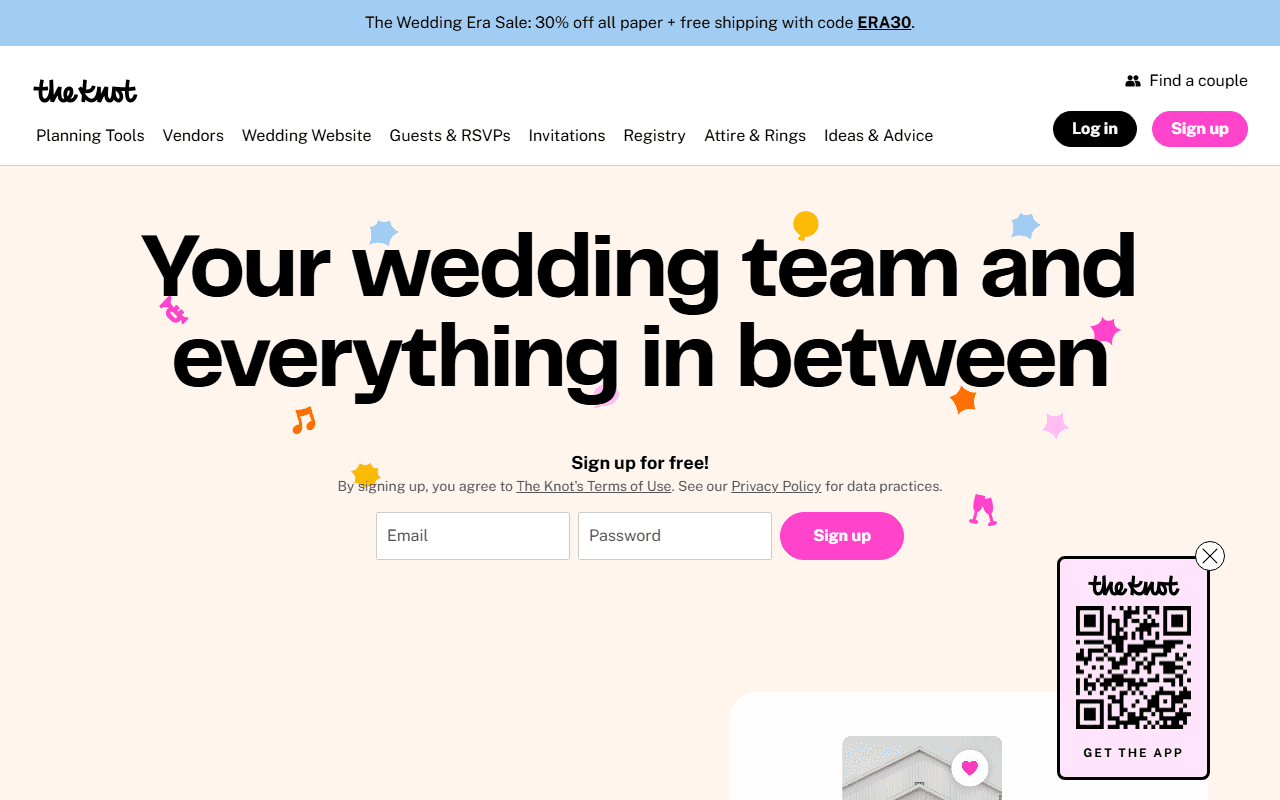
| The Knot | Free | Vendor advertising | Deepest US vendor directory | Paid placement shapes results; ad-heavy |
| Zola | Free | Registry commerce | Best native registry | Thinner planning tools; Android app gone |
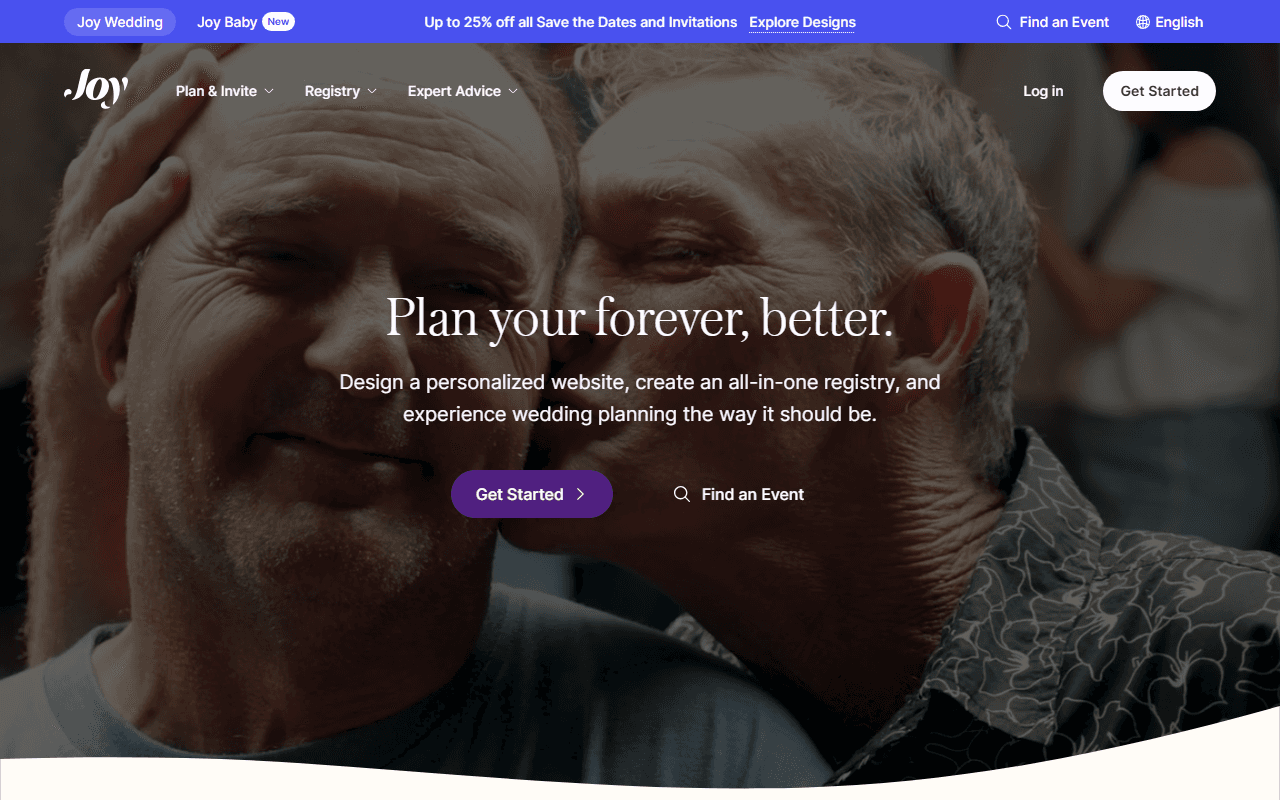
| Joy | Free | Print sales + add-ons | Strongest truly-free package | No vendor directory; passive planning |
| WeddingWire | Free | Vendor advertising (same parent as The Knot) | Review depth | Same paid-placement model |
| Bridebook | Free | Freemium vendor listings | Global reach (185 countries) | US directory still thin |
| Minted | Free website | Stationery sales | Design-matched websites + stationery | A website builder, not a planner |
| Eydn (ours) | $79 one-time | Couples pay directly | AI planner that takes action; no ads or data sales | No native registry; costs money |
The Knot: the wedding vendor directory, monetized
Start with what's true: if you need to research vendors at scale, The Knot is the best tool in America, with review volume (15.5 million across its parent's platforms) nothing else approaches. The planning checklist and thirty years of editorial content are genuinely useful.
The structure to understand: The Knot Worldwide describes, in its own corporate language, 25 million leads a year sent to roughly 900,000 wedding professionals, with visibility sold in advertising tiers reported from about $125/month to $1,000+/month in competitive metros. You're not the customer; you're the audience. Used knowingly — directory as phone book, rankings ignored, finalists verified off-platform — it's excellent. Full analysis: Eydn vs The Knot and the nine-marketplace comparison.
Zola: the wedding registry that funds everything else
Zola's native registry is the best gifting experience on any platform — one catalog, guests buy on Zola, zero-drama cash funds, a 20% post-wedding completion discount. The website builder is polished and the guest tools are coherent. Because revenue is commerce rather than vendor ads, the product is calmer than The Knot's.
Limitations: planning tools are basic, the vendor marketplace is thinner, the Android app was discontinued in early 2023, and the privacy policy answers "Yes" in its own tables to selling/sharing identifiers with advertising partners (opt-out available). Head-to-heads: Eydn vs Zola, The Knot vs Zola, Zola vs Joy.
Joy: the best genuinely free wedding app
Joy's free tier isn't a teaser — website, registry with zero-fee cash funds, guest list, Smart RSVP, a "magic link" contact collector, and hotel room blocks are all free, with no premium tier visible anywhere. Monetization is print sales (save-the-dates, invitations) and add-ons, which means no vendor advertising pressure in the product. For couples who want capable and free, Joy is the honest recommendation.
Trade-offs: there's no vendor directory at all, planning tools are guest-centric rather than budget/task-centric, and the privacy policy — while free of vendor-lead selling — does list "Delivering Targeted Ads" among its purposes and names ad networks including Meta, Google, and Criteo among recipients (details in Zola vs Joy and The Knot vs Joy).
WeddingWire: The Knot's sibling wedding marketplace
WeddingWire and The Knot share a parent (The Knot Worldwide) and a vendor-advertising program, so treat them as two doors into the same directory economy — vendors often appear on both, and the review depth is the draw. The same paid-placement caveat applies, because it's the same business. If you use one for discovery, you rarely need the other. (WeddingWire's own site blocks automated review, so we've kept this entry to what its parent publishes about the shared model.)
Bridebook: the global free wedding planner
Bridebook calls itself "the world's #1 wedding planner," serves couples in 185 countries, and has been featured by Apple, The New York Times, and the BBC — its core planning app is free, with venue and photographer directories built in. It's strongest outside the US; stateside, the directory is still thin in many markets, which matters if vendor discovery is your main need.
Minted: wedding websites for stationery lovers
Minted's free wedding websites do one thing beautifully: match your site to your printed stationery, with a seamless guest experience across RSVP and registry pages and a $50 stationery credit for creating one. It's a design product funded by paper sales — and it doesn't pretend to be a planner. If you want a gorgeous website and invitations from one design system, it's the pick; bring your own planning tools.
Eydn: the paid wedding planner with no one else in the room
Ours — so, disclosed and argued rather than asserted. Eydn is $79 one-time (or $14.99/month) for the deepest planning stack here: 50+ tasks generated from your date, a 36-line-item budget tracker, vendor management, guest list, seating chart, wedding website, and an AI planner that takes real action on your wedding data. The structural difference is the funding: couples pay directly, so there's no vendor money, no ads, and no data sales — the Pledge, refund-backed. The honest limitations: no native registry (link a Zola registry out), and it costs $79 when everything above is free.
Paid planning tools are a small category, and we expect it to grow — when a serious paid competitor merits this list, we'd rather compare honestly than pretend to be alone. Watch this space.
Who pays for your wedding app? (The question that sorts the list)
Every app above is shaped by its revenue: vendor-ad platforms (The Knot, WeddingWire) tune for lead volume, commerce platforms (Zola, Minted, Joy) tune for purchases, and a couple-funded tool tunes for the couple, because there's no one else to tune for. None of these models is a scandal — but only one of them has your planning as the product. That's the entire reason Eydn charges money, and the lens we'd suggest for any list like this one, including ours.
How to choose your wedding planning app
- Registry first? Zola, full stop. Pair it with whatever planner you like.
- Vendor research at scale? The Knot's directory as a phone book — then verify off-platform (how the marketplaces really work).
- Free and self-contained? Joy — the best no-cost package, eyes open on the trade-offs.
- A website that matches your invitations? Minted.
- The planning itself — budget, tasks, an AI that works with you, no monetization pressure? That's Eydn, and it's the job we built for.
Frequently asked questions
What is the best wedding planning app in 2026?
There's no single winner — it depends on which job matters most. The Knot has the deepest vendor directory, Zola the best registry, Joy the strongest genuinely-free package, and Eydn (which we make) the deepest planning tools and the only no-vendor-money, no-data-sales model. The honest move is picking per job, and many couples run two tools.
What's the best free wedding planning app?
Joy, for most couples. Its website, registry with zero-fee cash funds, guest tools, and Smart RSVP are all free with no premium tier visible, and it's the free option with the least monetization pressure in the product itself. The trade-offs: no vendor directory and thinner planning tools than paid options.
Are wedding planning apps really free?
The product is free; the funding comes from somewhere. The Knot and WeddingWire sell vendor advertising (their parent reports 25 million leads a year sent to wedding professionals). Zola earns registry commissions and stationery margins. Joy and Minted monetize print sales and add-ons. Each model shapes the product you experience — vendor-ad models shape what you see in search results, commerce models push their store. That's the analysis each entry below covers.
What's a good alternative to The Knot and Zola?
For a free alternative, Joy — strong core tools, no vendor advertising. For a paid alternative built around the planning itself, Eydn — $79 once for an AI planner that takes action, a 36-line-item budget, and no ads or data sales. Our head-to-head pages cover both matchups in depth.
Do wedding planning apps sell your data?
Check each privacy policy, because the answers differ in kind. The Knot's policy acknowledges disclosures that "may be considered a 'sale' under applicable laws"; Zola's answers "Yes" to selling/sharing identifiers with advertising partners; Joy's lists "Delivering Targeted Ads" among its processing purposes and names ad networks among recipients. All offer opt-outs. Eydn's policy is one sentence long in spirit: couples pay for the product, so data is never sold — that's the Pledge, refund-backed.
The planning-first pick: try Eydn free for 14 days — $79 once if it earns the job, and your data is never for sale either way.