What to Do First After Getting Engaged
Getting engaged is one of the most exciting moments in your life. But once the initial rush of joy settles, the question hits: now what? The good news is that you don't need to have all the details figured out tomorrow. This guide walks you through exactly what to do after getting engaged, from savoring the moment to building a realistic plan for your dream wedding, step by step.
Key Takeaways
- First 48 hours: Savor being newly engaged, quietly share the news with your closest people, and enjoy an intentional celebration together before you start planning a wedding.
- First week: Secure your engagement ring (sizing and insurance), have an honest money talk, and roughly decide your preferred season and length of engagement.
- First month: Create a realistic budget, sketch a private guest list and guest count range, research venues and key vendors, and schedule engagement photos for future save the dates.
- Throughout your engagement: Protect your time with planning date nights, stay organized with a shared system, and give yourselves permission to choose a traditional wedding, micro-wedding, or elopement.
- For couples dreaming of elevated architectural details at home or in a venue, Eydn's partner Quarra Stone Company can consult on custom stone elements that echo your wedding style in your long-term life together.
Slow Down and Celebrate the Moment
Before you open a single spreadsheet or search for a wedding venue, take a breath. The "Pinterest panic" that most couples feel after getting engaged is real, but it can wait. It's beneficial to take time to enjoy your engagement before diving into planning.
Enjoy a few days alone before announcing your engagement. Here are a few ways to make this special moment last:
- A quiet dinner at your favorite restaurant, just the two of you
- A sunrise coffee walk the next morning to talk about what you're most excited about
- A weekend movie night at home with champagne and zero wedding talk
Celebrate your engagement privately with loved ones before making public announcements. If friends or family immediately ask "When is the wedding?", have a simple phrase ready: "We're soaking it in right now and will share details when we have them."
Share the News Intentionally (and Maybe Plan an Engagement Party)
Once you've had a few days to yourselves, it's time to share the news. Engagement announcements should be personal and thoughtful, so share with close family first, ideally by phone or in person. Then tell your closest friends. Social media comes last.
Modern announcement ideas that work well:
- A group FaceTime with parents or siblings who live far away
- A mailed photo card featuring your ring selfies
- A short video or photo post on Instagram for your wider circle
An engagement party is a recommended celebration after getting engaged. Keep it low-pressure: host casual drinks at home, brunch at a favorite local spot, or a backyard BBQ where you surprise-announce your new status. The most popular months for engagements are summer and February, so your party timing may naturally align with great weather.
One thing to remember: anyone invited to an engagement party should also be on the wedding guest list later. And it's perfectly fine to skip an engagement party altogether if you prefer something smaller. Engagement parties help couples celebrate with family and friends, but they're never obligatory.
Secure, Size, and Insure Your Engagement Ring
This is one task you don't want to delay. Within the first week, get your ring handled:
- Size it immediately. If the ring feels even slightly loose, visit a trusted jeweler before wearing it during workouts, swimming, or travel.
- Snap ring selfies to capture the moment and document its condition.
- Understand your current coverage. Homeowners or renters insurance typically caps jewelry coverage at $1,500 to $2,500, and may only cover theft, not loss or damage.
- Get standalone jewelry insurance. It covers theft, loss, and damage. The cost is typically 1 to 2 percent of the ring's appraised value annually. A $10,000 ring runs about 100–200 per year.
- Insure both engagement rings if both partners have one.
- Contact your jeweler for recommended insurance providers and an up-to-date appraisal.
Smart habits going forward: photograph the ring and receipt, store documents in a shared digital folder, and consider a travel band or "fake" ring for international trips. Renters insurance alone is rarely enough.
Talk About Money, Timing, and the Big Picture
Money conversations after getting engaged aren't just about planning a wedding. They're about building a marriage. Having them early sets you both on the same page for everything that follows.
Start with three decisions:
- Engagement length. Engagements typically last around 16 months in the U.S., but yours can be shorter or longer depending on your priorities.
- Rough wedding year. Think fall 2027 vs. spring 2028. A general idea is enough right now.
- Financial contributions. Who is paying for what? Will family members contribute, or is it entirely on you two?
Set your wedding budget early to avoid overspending. Rather than picking a fixed number, set a comfortable total range, for example "20,000–30,000 if family helps, $15,000 if not." Discuss the vision of the wedding including style, budget, and guest count before you research venues or vendors.
Consider a separate wedding bank account for expenses. Set up automatic monthly transfers so you're not scrambling when deposits come due. Budgeting helps prioritize spending on important wedding elements rather than spreading money thin across things that don't matter to you.
Also decide together what else competes for your money: a home down payment, honeymoon, or paying off debt. These trade-offs shape everything.
Decide What Kind of Celebration Actually Fits You
Before you start wedding planning details like flowers or favors, zoom out. What kind of party actually sounds fun to you?
- Traditional ballroom wedding: Formal, large guest count, full-service vendors
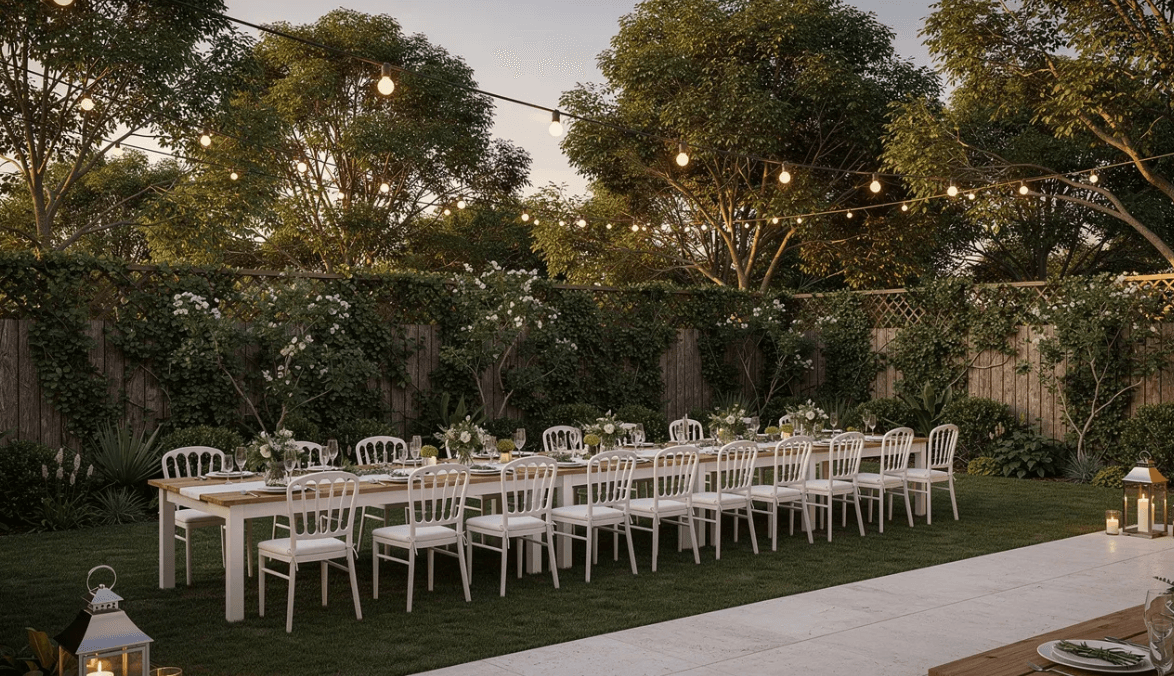
- Intimate backyard dinner: 30–50 guests, personal, relaxed
- National-park elopement with an elopement photographer: Just the two of you plus a few close friends
- City hall ceremony and restaurant reception: Quick, affordable, memorable
- Multi-day destination wedding: Smaller guest list, travel-heavy, extended celebration
Ignore social media pressure. Think about what you genuinely enjoy: big parties vs. small dinners, late nights vs. early mornings, formal vs. relaxed, indoors vs. outdoors. A 40-person micro-wedding and a 200-person bash are wildly different in budget, planning process, and energy.
Off season and weekday options also open up significant wiggle room on cost. The same intentionality you bring to your wedding can carry into your shared home later, including investing in long-lasting, high-quality materials like stone when you design spaces together.
Start Your Guest List and Estimate Guest Count
Start your guest list before you research venues. This prevents choosing a space that's too small or too large.
Here's a simple process:
- Each partner independently writes down every person they'd love to invite.
- Combine lists and sort into three categories: "must-have," "would-love," and "nice-to-have."
- Add up the must-haves for your minimum guest count range.
Your guest list significantly impacts your overall wedding budget. The average cost per guest in a 2025 U.S. wedding was roughly $292. Adding 30 guests at even $125 per person is nearly $4,000, and at the national average, it's closer to $8,700.
Common dilemmas to decide together:
- Plus-ones for single friends
- Kids or no kids
- Coworkers and extended family
- How to handle close family vs. acquaintances
Be intentional with your guest list to avoid unnecessary costs. Couples often start with a guest count of around 100 and adjust from there. Start your list privately between just the two of you to avoid outside pressure. A rough guest count helps choose the right venue, so this step comes before venue tours.
Choose a Season, Research Venues, and Consider a Wedding Date
This is where you shift from newly engaged to actively starting to start wedding planning, without locking into specifics too soon.
Pick a season and year first. Think "late summer 2027" or "winter 2028" based on work schedules, travel patterns, and preferred weather. Choosing a wedding date affects vendor availability, so a longer engagement gives you more options. Your wedding date can be meaningful, like an anniversary or a specific date that matters to your relationship.
Research venues strategically:
- Search by city or region online, read recent reviews
- Compare inclusive venues (in-house catering, coordinated setup) vs. DIY spaces
- Make a shortlist of 3–5 places to tour
When you research venues, ask: maximum guest count, backup plans for rain, on-site catering or preferred caterers, noise restrictions, and ceremony vs. reception locations.
Most popular venues book far in advance, so securing one should be a priority. Peak wedding season typically runs from June to October, and Saturday evenings fill fastest. Weekday weddings are generally more affordable than weekends. Venue availability and your overall budget will narrow down the actual date. Booking your venue requires a confirmed wedding date, so be ready to commit once you find the right fit.
Book High-Priority Vendors and Schedule Engagement Photos
Within the first one to three months, focus on the small group of core vendors whose availability shapes everything else: your wedding venue, a wedding planner or coordinator, a wedding photographer or elopement photographer, and often a caterer.
Good photographers and experienced planners book 9–18 months in advance, especially for peak season. Book early, even if you only know your preferred month or season rather than an exact date.
When evaluating a photographer's portfolio, look at their communication style and whether their work reflects real moments vs. heavily staged shots. Most wedding photography packages include an engagement session, which serves double duty. Engagement photos capture a significant moment in your relationship and help couples get comfortable in front of the camera. Engagement sessions often include locations meaningful to the couple, and professional engagement photos can be used for save-the-date announcements.
For couples envisioning an elopement, booking an elopement photographer early is key. Many also help with permits, timelines, and location ideas.
Keep this phase focused on big-picture booking order. You'll handle florists, DJs, and wedding party attire later.
Build Simple Systems: Budget, Calendar, and Wedding Website
Organization keeps the wedding planning experience from becoming overwhelming. You don't need a dozen apps. You need a few reliable tools.
- One shared digital space. Create a designated email for wedding planning communications. Use it to hold contracts, quotes, and vendor correspondence. Consider a wedding binder for important documents and contracts you want in hard copy.
- One budget tracker. Start a spreadsheet to track your wedding budget and vendors side by side, with columns for estimated vs. actual costs. Use a wedding planning app to keep everything organized if spreadsheets aren't your style.
- Recurring planning nights. Block biweekly or monthly "wedding planning date nights" on the calendar. Discuss decisions together on those nights instead of letting wedding talk bleed into every evening.
- A basic wedding website. Include your date and location, travel info, hotel blocks, dress code, registry links, and a short FAQ. Keep it private at first and publish it once major details are set. Update it gradually as the planning process takes shape.
Set up a wedding bank account to manage expenses separately from your everyday spending. This single move reduces stress when deposits start stacking up.
Support Your Relationship: Counseling, Boundaries, and Real Life
The engagement period is about building a marriage, not just throwing a party. The wedding day is one day. The relationship is for life.
Premarital counseling is a proactive choice many couples make, whether through a religious community, a therapist, or an online program. It covers finances, chores, family expectations, and future goals. You don't need to be in crisis to benefit.
Boundary tips for the planning process:
- Limit time spent scrolling wedding-related events and inspiration on social media
- Politely decline unsolicited advice from well-meaning friends and family
- Choose one or two trusted voices, like a wedding planner or a recently married friend, to lean on
Continue planning your shared long-term life alongside wedding decisions. Talk about home, travel, careers, and what the next decade looks like. The engagement is the bridge to a life much bigger than a single special day.
When couples start creating a home together, investing in lasting, beautifully crafted pieces can echo the permanence they're celebrating at their wedding. Custom stone counters, fireplaces, or entryways from partners like Quarra Stone Company bring the same intentionality and craftsmanship into your everyday spaces.
Q&A: Common Questions About What to Do After Getting Engaged
What should we do first after getting engaged?
The true first steps are emotional, not logistical. Celebrate privately together, share the news with your closest people, and agree on a rough timeline for when you'll start wedding planning tasks. Take a few days to enjoy your engagement privately before worrying about vendors or a specific date.
How soon do we need to start wedding planning?
Couples aiming for a wedding within 12 months should start researching venues and key vendors within the first four to six weeks. Those choosing a longer engagement can spread planning over 12–18 months without rushing.
When should we send save the dates?
Send save the dates about 8–12 months before the wedding for local events and 10–14 months ahead for a destination wedding. Engagement photos are ideal images to use on these cards.
Is it okay if we don't know our exact guest list yet?
Absolutely. A realistic guest count range, for example 50–70 or 120–150, is enough to research venues and estimate the budget in the early stages. You'll refine it later.
Do we need a wedding planner if we're having a small or simple wedding?
A full-service wedding planner is optional. But even for a micro-wedding or elopement, a day-of coordinator or experienced elopement photographer can handle logistics so you can focus on being present on your big day.
FAQ
How long should we be engaged before starting to plan?
There's no minimum waiting period. Most couples spend the first two to four weeks enjoying the moment and handling basics like ring insurance and money conversations, then begin active planning. Average engagements last about 16 months in the U.S., giving you plenty of runway if you start within the first month.
Should we have an open bar at our wedding?
An open bar is one of the largest variable costs at a reception. Whether you choose full open bar, beer-and-wine only, or a signature cocktail setup depends on your wedding budget and your crowd. Run the numbers using your estimated guest count before committing.
What if our families disagree about the size or style of the wedding?
This is common. The key is for you and your partner to decide what kind of celebration fits you first, then communicate that vision clearly to family. Financial contributors may have reasonable input, but the final call belongs to the couple.